
Infrared Windows & Filters
Infrared Windows and Filters
Protective windows for cameras and payloads, filters that select a waveband, and neutral density filters that attenuate bright light. We choose the material from the waveband, set the thickness and coating from the operating environment, and have them made by a partner manufacturer. Country of origin: Taiwan.
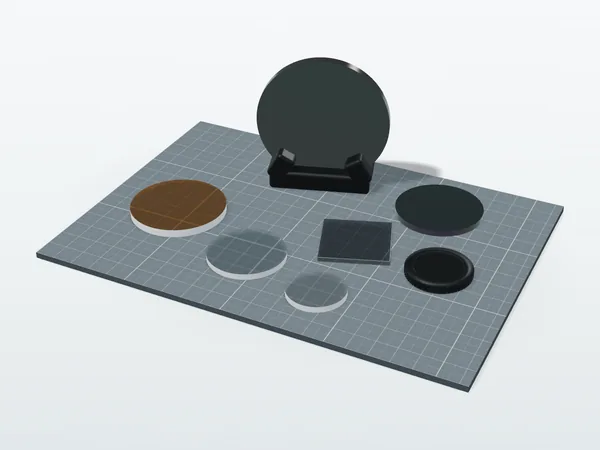
Items
| Item | Use | How the specification is set |
|---|---|---|
| Protective windows | Optical windows for cameras, lasers and payloads; viewing windows for sealed or pressurized housings | Waveband, clear aperture, thickness (calculated from pressure difference and aperture), coating |
| Bandpass filters | Pass only a specific band, such as a laser wavelength or a water absorption band | Center wavelength, FWHM, peak transmission, blocking range and depth |
| Longpass and shortpass filters | Cut out unwanted bands, such as visible light or thermal radiation | Cut-off wavelength, edge steepness, blocking depth |
| Neutral density filters | Attenuate bright light evenly, for example when viewing laser spots or bright processes | Optical density (OD), waveband, flatness of attenuation |
Choosing a material by waveband
| Material | Transmission range | Suited to | Notes |
|---|---|---|---|
| Optical glass | Visible to about 2 µm | Visible, near-infrared and SWIR | Not suitable for MWIR or LWIR |
| Sapphire | About 0.2–5 µm | Visible to MWIR; scratch- and pressure-resistant | Transmission falls above 5 µm; not suitable for LWIR |
| Silicon | About 1.2–7 µm | MWIR (3–5 µm); lightweight | Opaque to visible light; not suitable for LWIR |
| Calcium fluoride | About 0.2–8 µm | Ultraviolet to MWIR; low dispersion | Sensitive to rapid temperature changes |
| Zinc selenide | About 0.6–16 µm | Visible red to LWIR; can share a path with a visible alignment laser | Soft and easily scratched; needs a protective coating outdoors |
| Germanium | About 2–14 µm | The main material for MWIR and LWIR | Refractive index about 4, so an anti-reflection coating is essential; transmission drops noticeably above about 100 °C |
Transmission ranges are approximate for the bulk material; actual transmission depends on thickness and coating. Coating principles are explained in our article on optical coatings, and the uses of each band in the infrared band reference table.
What to include in a quote request
- Waveband or laser wavelength
- Shape and size: diameter or width and height, thickness and tolerances
- Surface quality and flatness requirements, if any
- Coating (anti-reflection, hard coating) and environment: temperature, humidity, salt fog, pressure difference
- Quantity and required delivery date
Related products
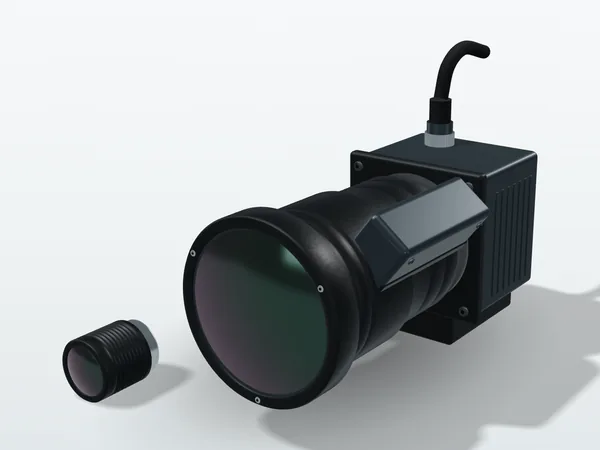
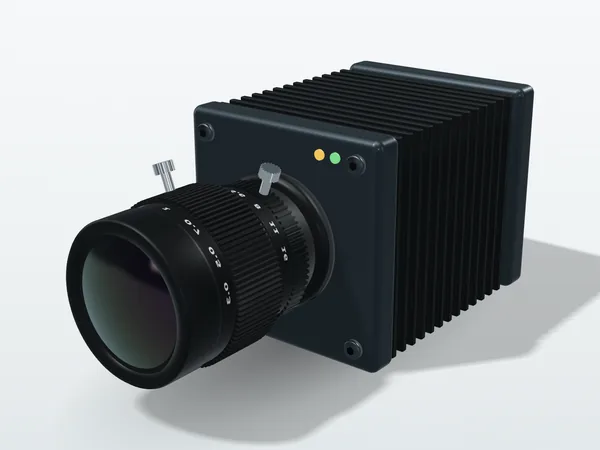
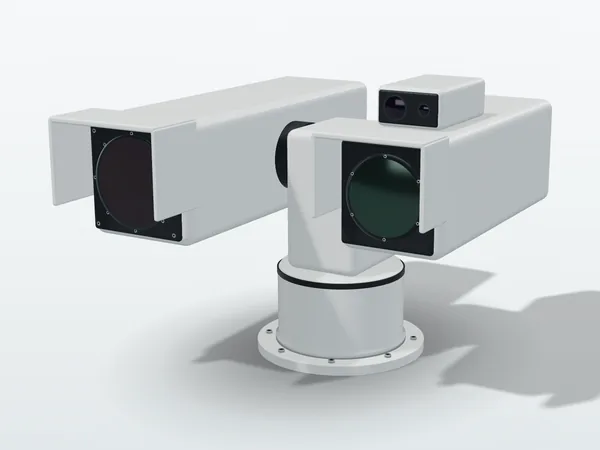
Original illustration, not a product photo. Actual appearance varies by model.
Not sure which material to use?
Tell us the waveband, aperture and operating environment; we will suggest a material and coating before quoting.